Coil

Coil-reinforced Tubing (Project Confirmation Required)

A metal or polymer coil is placed between inner and outer tubing layers and consolidated by jacketing or thermal fusion to improve kink resistance, crush resistance, and torque transmission. Bioteque’s public information does not explicitly identify coil reinforcement as a standard production capability; wire material, pitch, reinforced length, layer bonding, and validation methods should therefore be confirmed for each project. Typical checks include OD, kink resistance, torque, tensile strength, and structural integrity.


Extrusion

Precision Medical Tubing Extrusion

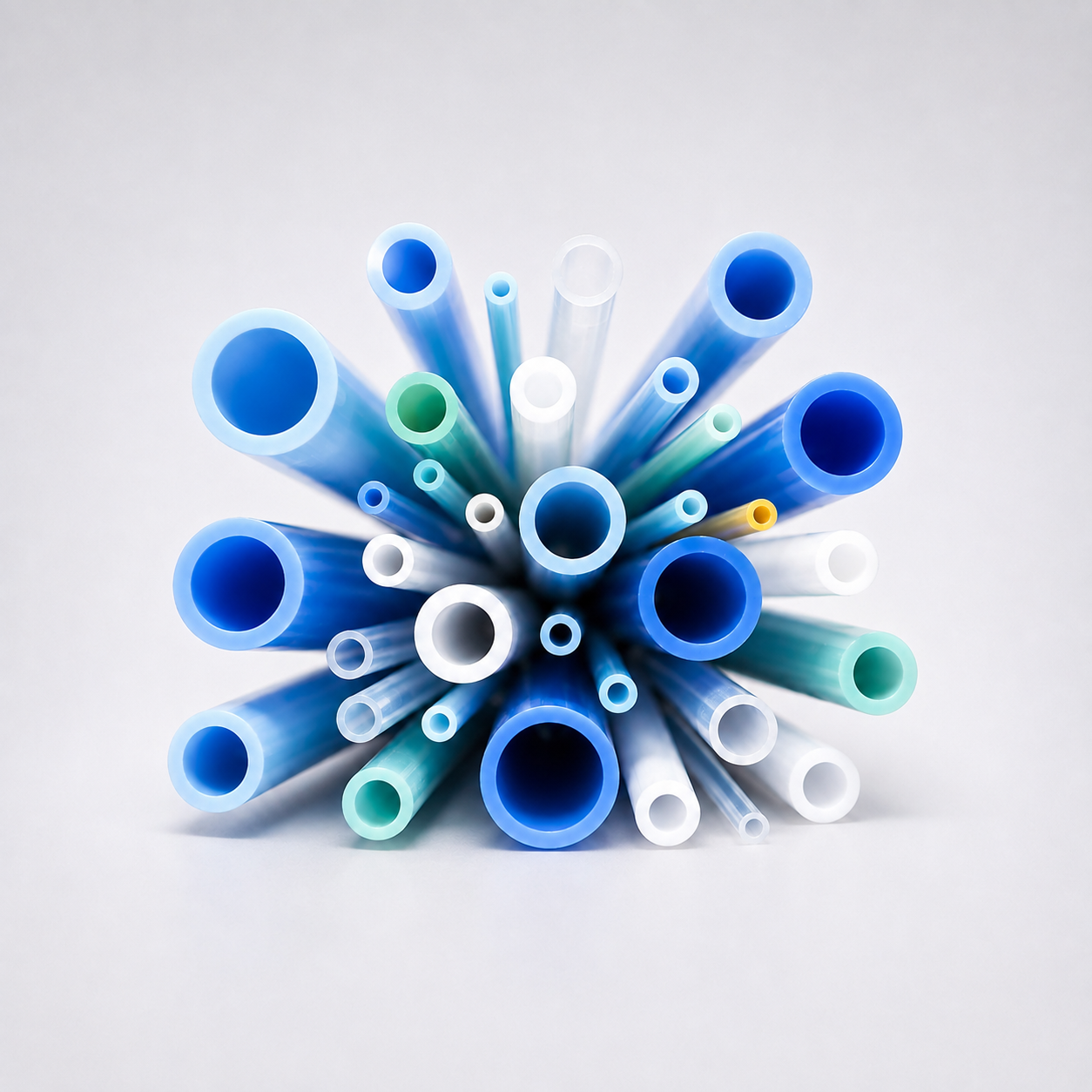
Single-lumen, multi-lumen, coil-reinforced, and braided tubing constructions are produced from medical-grade polymers, with in-line and off-line measurement of OD, ID, wall thickness, lumen position, and concentricity.

Multi Lumen

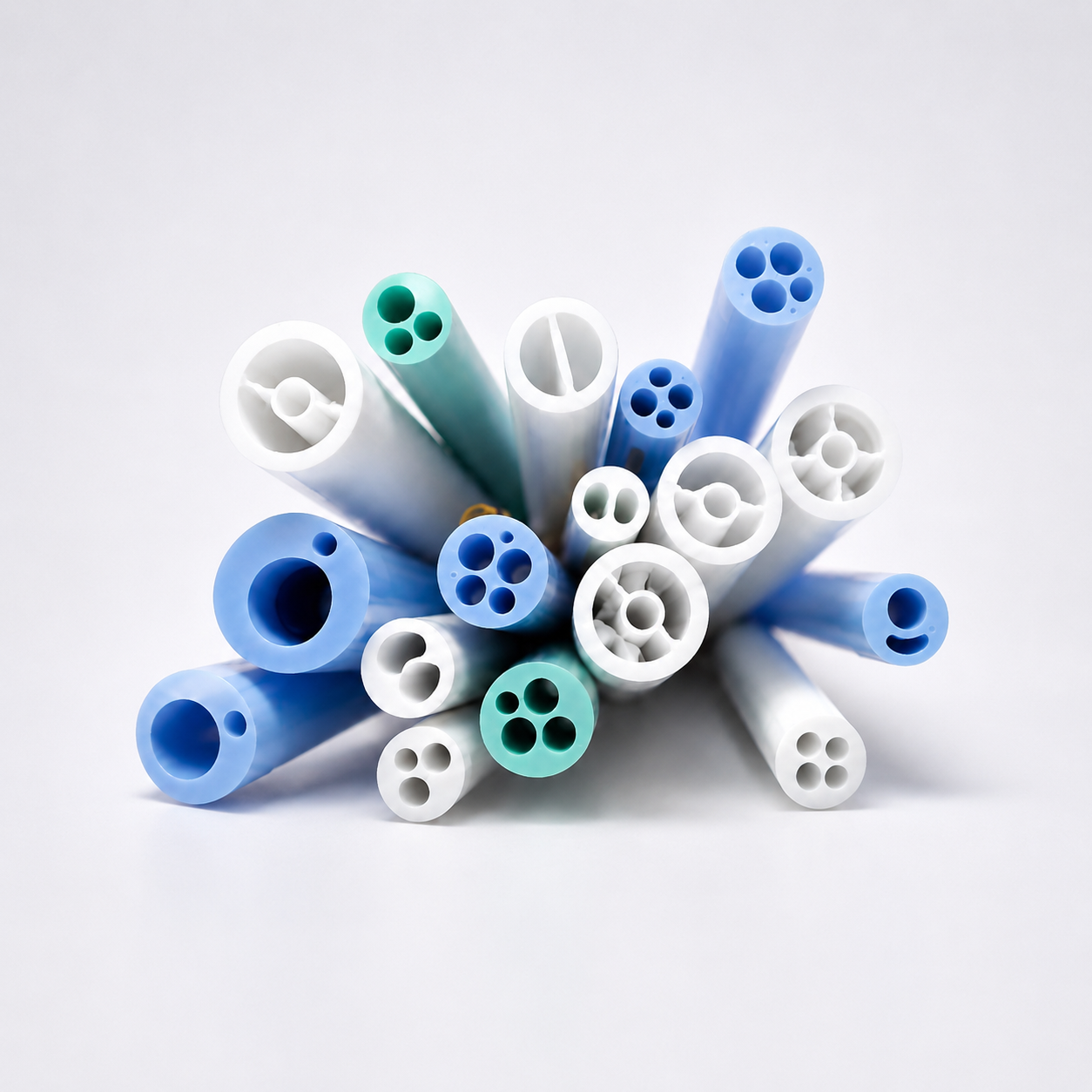
Precision Multi-lumen and Profile Extrusion

Bioteque publishes capabilities for single-, dual-, and triple-lumen tubing and film extrusion, with material experience including TPU, nylon, PVC, PE, PP, PS, and non-DEHP PVC. Multi-lumen or profile dies create independent channels within one tube, while in-line/off-line measurements control OD, ID, wall thickness, lumen position, concentricity, and surface quality. Published ranges are approximately 1.00–12 mm with tolerances down to 0.03 mm; actual capability depends on material and drawing requirements.

Single Lumen

Precision Single-lumen Extrusion

Medical-grade polymers and extrusion tooling are selected to form one continuous flow channel for applications such as bloodlines, infusion tubing, catheter shafts, protective sleeves, and film tubing. Key controls include material lot and drying, melt/die conditions, puller and cooling stability, plus ID/OD, wall thickness, concentricity, durometer, length, clarity, and appearance. Dimensions and tolerances should follow the approved drawing.

Braided

Braided Reinforced Catheters

Bioteque’s published angiographic catheter information describes metal and non-metal braid structures. A metal-braided shaft supports torque stability, pushability, burst resistance, and kink resistance; a non-metal proximal braid supports flexibility and shapeability, while the distal section may use a soft radiopaque tip. Process controls include braid density/angle, reinforcement zones, interlayer bonding, OD, torque response, kink resistance, and pressure performance.

Back